
An AI Just Found Bugs That Hid for 27 Years. Your Corporate Treasury Is Running on the Same Code.
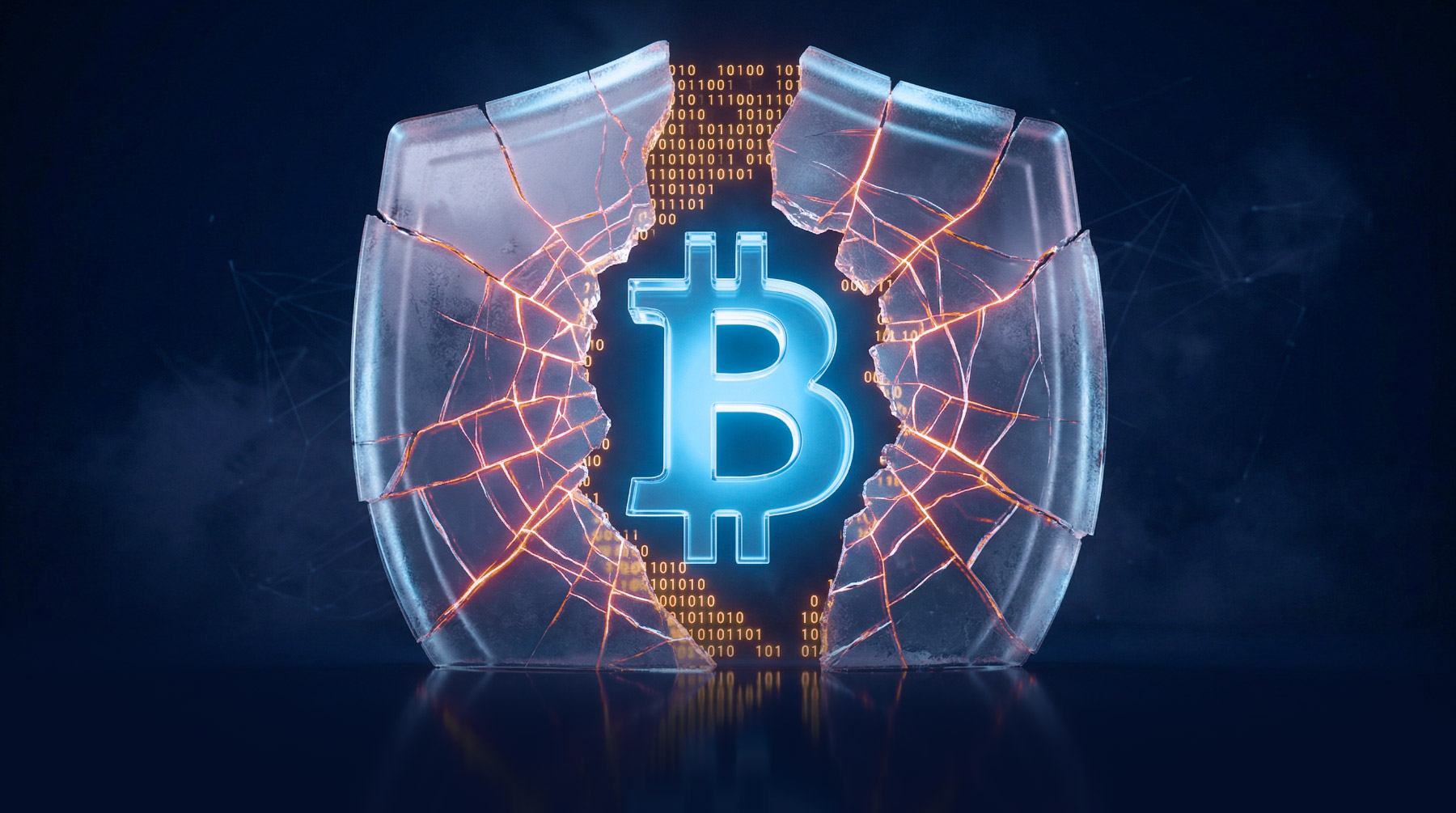
Today, Anthropic announced Project Glasswing. Their most powerful AI model, Claude Mythos Preview, had been turned loose on the world's most critical software — operating systems, web browsers, media encoders, the Linux kernel — and it found thousands of zero-day vulnerabilities. Not theoretical weaknesses. Actual exploitable flaws, many of them critical, some of them hiding in code that had been reviewed by the best security experts on the planet for decades.
One vulnerability had been sitting in OpenBSD — widely considered the most security-hardened operating system in existence — for 27 years. Another lived in FFmpeg, a codebase so foundational it touches nearly every piece of video software on earth, in a line of code that automated testing tools had executed five million times without catching the problem.
The cybersecurity implications made headlines. What did not make headlines — and should have — is what this means for corporate finance.
The Infrastructure Your Treasury Runs On
Here is a question that no Fortune 500 CFO is asking but every one of them should be: what software sits between your corporate treasury and the financial system?
The answer is a stack of legacy enterprise systems — ERP platforms, banking APIs, payment processors, custody interfaces, reconciliation engines — most of which run on the same foundational software that Anthropic just demonstrated is compromised. Linux kernels. OpenSSL libraries. Browser-based interfaces to banking portals. Database systems that were architected in the 1990s and patched forward ever since.
These are not exotic attack surfaces. These are the systems that process wire transfers, manage cash positions, execute FX hedges, and reconcile treasury operations for virtually every major corporation on earth. And Anthropic just proved, with peer-reviewed rigor, that AI can now find exploitable vulnerabilities in this class of software faster and more comprehensively than any human security team.
The global cost of cybercrime is projected to reach $10.5 trillion annually by 2025, according to Cybersecurity Ventures. IBM's 2025 Cost of a Data Breach report puts the average breach cost at $4.88 million. Financial services firms are among the most targeted sectors, and treasury operations — where the actual money sits — are the highest-value targets within those firms.
This is not a theoretical risk. This is a quantified, accelerating exposure that just got materially worse.
What Has Never Been Hacked
Now consider Bitcoin.
Fifteen years of continuous operation. A network that processes hundreds of billions of dollars in value. A $1.5 trillion market capitalization. The most scrutinized codebase in the history of financial software — attacked by every nation-state actor, every criminal syndicate, every opportunistic hacker with a laptop and a motive.
Bitcoin has never been successfully attacked. Not once.
The reason is architectural, not accidental. Bitcoin's security model is fundamentally different from the legacy software stack. It does not rely on perimeter defense — the castle-and-moat approach that Anthropic just demonstrated is inadequate. Instead, Bitcoin uses cryptographic proof, distributed consensus, and economic incentives that make the cost of attack prohibitively higher than the potential reward. There is no central server to breach. There is no single line of code where a 27-year-old vulnerability can hide, because the entire network validates every transaction through independent consensus.
This is not a philosophical argument. It is an engineering fact. And in a world where AI has just compressed the timeline for discovering software vulnerabilities from years to hours, the distinction between perimeter-secured legacy systems and cryptographically-secured blockchain infrastructure becomes the most important variable in corporate risk management.
The Treasury Implication
I spend most of my advisory time with corporate CFOs and treasury teams through our work at Pando Research. The conversation has historically centered on opportunity — Bitcoin's risk-adjusted returns, the mNAV premium for publicly traded companies holding digital assets, the FASB fair value accounting standard that now lets corporations report the upside.
Project Glasswing just added a second dimension to that conversation: defensive infrastructure.
Consider the position of a Fortune 500 company with $10 billion in cash equivalents. That capital sits in money market funds, Treasury bills, and bank deposits — all accessed, managed, and reconciled through legacy software systems that Anthropic just proved are riddled with exploitable vulnerabilities. The custody chain runs through banking infrastructure built on code that was written before most of today's cybersecurity threats existed.
Now consider an allocation — governed, compliant, board-approved — into Bitcoin held in institutional-grade custody with multi-signature cold storage. That position sits on a network that has withstood fifteen years of continuous attack. It is not accessed through a browser-based banking portal running on a compromised Linux kernel. It is secured by mathematical proof on a ledger that no AI, no matter how capable, has been able to compromise.
The risk calculus just shifted. Not because Bitcoin got safer — it was always this safe. But because Anthropic just demonstrated, in public and with receipts, that the alternative infrastructure got meaningfully less safe.
The Acceleration Problem
Here is what makes Project Glasswing particularly significant for corporate treasury strategy: the capability gap is only widening.
Anthropic is offering their vulnerability-finding model to defenders through a structured partnership with Cisco, AWS, Microsoft, CrowdStrike, Google, and JPMorgan. That is commendable and necessary. But the underlying capability — AI that can autonomously find and chain together exploitable vulnerabilities in critical software — will not remain exclusive to defenders. The model's capabilities are a product of general advances in AI reasoning and coding ability. Every frontier AI lab is on the same trajectory.
Cybersecurity has always been an asymmetric contest. Defenders need to protect every surface. Attackers need to find one flaw. AI just tilted that asymmetry further toward offense. The honest assessment — and Anthropic deserves credit for saying this directly — is that the window between vulnerability discovery and exploitation has collapsed from months to minutes.
For corporate treasurers, this means the risk profile of legacy financial infrastructure is not static. It is degrading. Every quarter that passes, the AI-augmented attack surface expands while the legacy defense posture struggles to keep pace. The $10.5 trillion annual cybercrime figure is not a ceiling. It is a baseline that is about to accelerate.
The Convergence
I have been saying since founding Deal Box that markets migrate toward rails that are more efficient, more transparent, and more secure. The security argument for blockchain infrastructure has always been strong in the abstract. What changed last week is that the security argument against legacy infrastructure became concrete, specific, and impossible to ignore.
The corporate digital asset treasury model is built on three pillars: return enhancement through Bitcoin's risk-adjusted performance, accounting clarity through FASB's fair value standard, and now — unmistakably — infrastructure security through cryptographic rather than perimeter-based defense.
Over 190 public companies already hold Bitcoin on their balance sheets. FASB fair value accounting is in effect. Institutional custody infrastructure is indistinguishable from traditional prime brokerage. The SEC and CFTC just classified Bitcoin as a digital commodity with clear regulatory jurisdiction. And now Anthropic has published what amounts to a 68-page indictment of the software infrastructure that underpins the traditional alternative.
Every one of those developments independently strengthens the case for corporate digital asset treasury strategies. Together, they describe a convergence that is difficult to dismiss as speculative.
What CFOs Should Be Asking
If you are a corporate treasurer or CFO reading this, three questions deserve immediate attention.
First, has your security team assessed how the AI-accelerated vulnerability landscape affects the specific systems that manage your treasury operations? Not your general IT posture — your treasury stack specifically. The wire transfer infrastructure, the banking API connections, the cash management platforms. Project Glasswing suggests those systems contain exploitable vulnerabilities that have not yet been found by your current security tools.
Second, does your board understand the distinction between perimeter-secured infrastructure and cryptographically-secured infrastructure? This is no longer an academic distinction. It is a material risk variable that belongs in the same conversation as interest rate exposure, counterparty risk, and operational resilience.
Third, have you modeled a governed digital asset allocation — not as a speculative bet, but as a treasury diversification strategy that reduces concentration risk in legacy infrastructure? A 10% to 20% allocation into Bitcoin held in institutional custody, structured with board-level governance and FASB-compliant reporting, is not a crypto play. It is a risk management decision informed by the same security realities that Anthropic just made public.
The infrastructure question used to be a secondary consideration in corporate treasury strategy. It was always about yield, liquidity, and regulatory compliance. Anthropic just made infrastructure security a first-order variable.
The companies that recognize this early will build the governance frameworks and custody relationships now, while the infrastructure advantage is still asymmetric. The companies that wait will eventually arrive at the same conclusion — but at a higher cost and with less favorable terms.
I have spent nearly a decade building toward this exact convergence. The thesis was never about price speculation. It was always about infrastructure. And last week, one of the world's leading AI companies published the most compelling evidence yet that the old infrastructure is not built to withstand what is coming.
Fintech
Newsletter.


