Inside the Vision to Build the Operating System for Institutional Finance
5 min read

Inside the Vision to Build the Operating System for Institutional Finance

Business
/
Aug 6

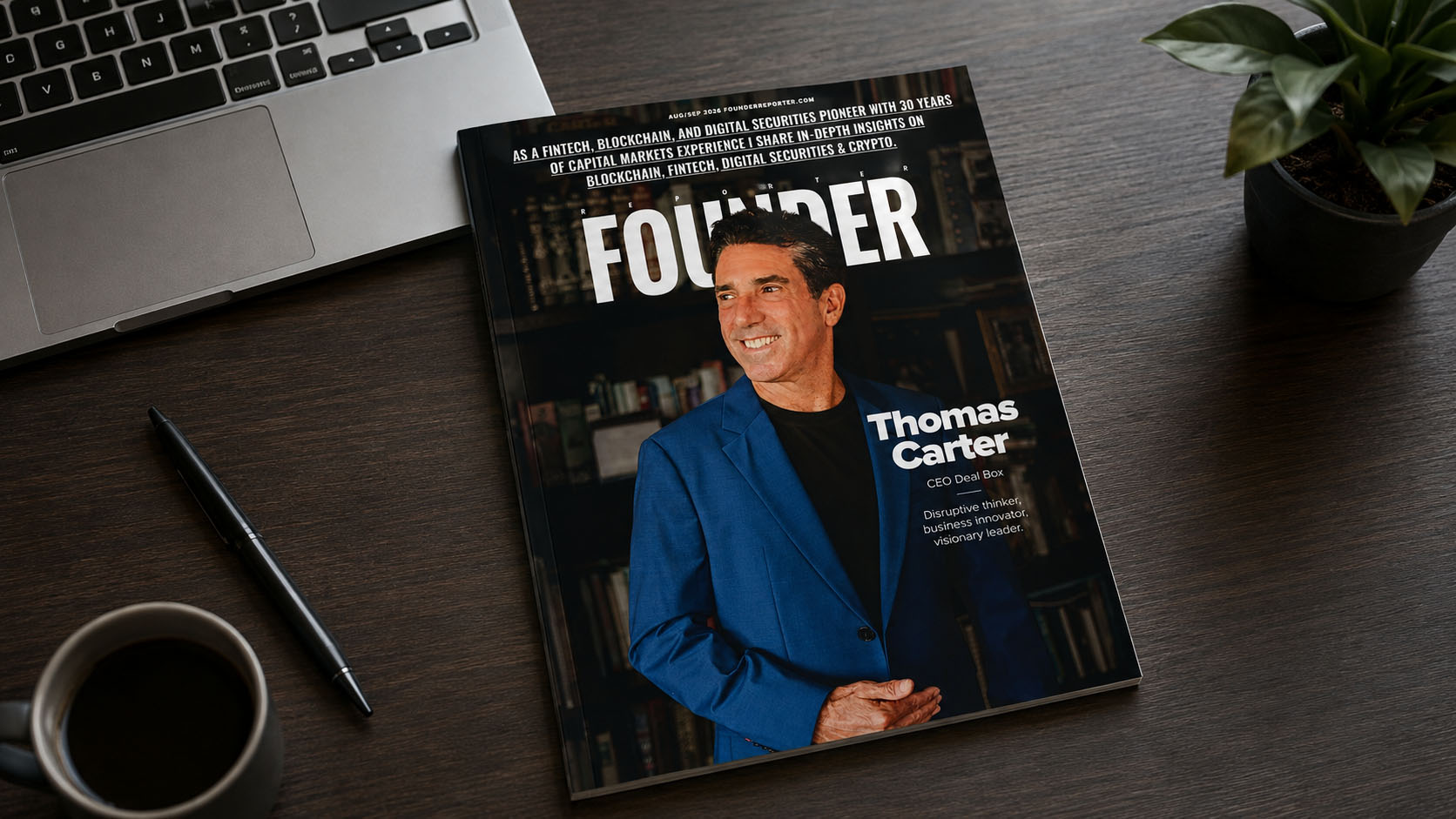
Long before Bitcoin treasury strategies entered boardroom conversations and tokenization became strategic priorities for many of the world’s largest financial institutions, entrepreneur Thomas Carter believed the architecture of capital markets was beginning to change. Rather than waiting for that transformation, he began assembling the infrastructure he believes institutions will need to operate in the next era of finance.

For more than three decades, Carter has built businesses around emerging technology. From interactive multimedia during the CD-ROM era to early mobile gaming, public companies, and capital formation, his career has consistently followed the same pattern: identify structural shifts before they become obvious and build practical businesses around them.

That philosophy led to the founding of Deal Box in 2016.

Based in Carlsbad, California, Deal Box established itself as a capital markets advisory firm specializing in investment packaging, issuer readiness, and capital formation. As blockchain technology matured, the firm became one of the earliest organizations to facilitate the tokenization of a real-world asset, combining traditional securities expertise with emerging digital infrastructure.

Today, Deal Box remains focused on what it has always done best: helping companies prepare for and access capital markets.

As conversations with corporate boards increasingly extend beyond raising capital to managing digital assets, treasury modernization, artificial intelligence, and programmable ownership, Carter has begun developing a broader financial operating architecture designed to connect these disciplines rather than treat them as isolated technologies.

At the center of that vision is TreasOS, a platform currently being developed as an enterprise operating system for the modern digital balance sheet.

Rather than replacing existing treasury, banking, or enterprise systems, TreasOS is intended to serve as the intelligent orchestration layer across institutional finance. The platform is being designed to connect digital asset treasury management, artificial intelligence, governance, tokenization, institutional banking, and capital markets infrastructure into a unified operating environment.

Its underlying operating model, the TreasOS Enterprise Value Flywheel, treats treasury, financial intelligence, tokenization, and capital formation as interconnected capabilities that reinforce one another over time. The objective is not simply to digitize financial assets but to provide organizations with a trusted control plane for managing increasingly digital financial operations.

Complementing TreasOS is BlendFi, a sovereign digital banking platform designed to connect traditional banking services, tokenized real-world assets, digital assets, payments, and Banking as a Service infrastructure. By bridging conventional financial systems with blockchain-native markets, BlendFi is intended to help institutions move value more seamlessly across banking, payments, treasury, and digital asset ecosystems.

Supporting the underlying infrastructure is Orobit, a Bitcoin-native institutional network built on proprietary SCL (Simple Contract Language) and SQRL (Secure Quantum Reliable Ledger) technologies. Designed to leverage Bitcoin as a secure settlement layer while incorporating scalable and quantum-resistant architecture, Orobit provides foundational infrastructure for programmable financial applications.

Identity and trust are addressed through True I/O, which develops decentralized identity infrastructure including Bitcoin Naming Service (.btc), Universal Credential Identity (UCID), and enterprise authentication technologies for individuals, organizations, and connected devices.

The ecosystem is supported by Pando Research, an institutional intelligence platform producing market analysis, strategic research, and industry insights that help organizations navigate the rapidly evolving digital asset economy.

Viewed individually, each organization serves a distinct purpose.

Deal Box focuses on capital markets advisory, investment packaging, issuer readiness, and capital formation.

TreasOS is being developed as the enterprise operating system for digital treasury and balance sheet modernization.

BlendFi provides sovereign digital banking and financial connectivity across traditional and digital financial systems.

Orobit delivers Bitcoin-native infrastructure and programmable settlement.

True I/O establishes digital identity and institutional trust.

Pando Research provides institutional intelligence and strategic market insight.

Viewed together, they represent something larger than a collection of independent businesses. Carter describes them as components of a unified financial operating architecture designed to connect capital formation, treasury management, banking, payments, identity, artificial intelligence, and programmable ownership into a single institutional framework.

That broader vision increasingly aligns with the direction of the financial industry. Global banks, asset managers, technology companies, and public corporations continue investing in tokenization, digital assets, artificial intelligence, and modern financial infrastructure. The conversation has shifted from whether these technologies will influence finance to how institutions will integrate them responsibly.

Outside financial technology, Carter also established himself as an innovator in the action sports industry. As founder of Thruster Wake, he helped pioneer wake sports during its formative years and was later inducted into the Wake Sports Hall of Fame with an Innovation Award. The same entrepreneurial mindset continues to shape his approach to technology and long-term business building.

A husband and father of five sons, Carter credits much of his leadership philosophy to his faith and family. Those values rarely appear in investor presentations, but they remain central to how he approaches stewardship, partnerships, and building businesses intended to endure.

Looking ahead, Carter believes the convergence of artificial intelligence, blockchain technology, Bitcoin, tokenization, sovereign digital banking, digital identity, and programmable ownership represents more than another technology cycle. He believes these innovations are gradually reshaping the operating model of institutional finance.

Every major technological shift has required new infrastructure before it reached mainstream adoption. The internet required browsers and cloud computing required hyperscale data centers. Carter believes the next evolution of finance will require its own foundational operating architecture.

Whether that vision unfolds exactly as anticipated will ultimately be determined by the market. What is already becoming clear, however, is that the traditional boundaries separating capital markets, treasury, banking, identity, payments, and digital assets are beginning to converge.

Rather than viewing those developments as isolated trends, Thomas Carter has spent much of the past decade assembling what he believes are the foundational components of a new financial operating architecture for institutional finance.


Inside the Vision to Build the Operating System for Institutional Finance
5 min read

Inside the Vision to Build the Operating System for Institutional Finance

Business
Aug 6
/
5 min read

Long before Bitcoin treasury strategies entered boardroom conversations and tokenization became strategic priorities for many of the world’s largest financial institutions, entrepreneur Thomas Carter believed the architecture of capital markets was beginning to change. Rather than waiting for that transformation, he began assembling the infrastructure he believes institutions will need to operate in the next era of finance.

For more than three decades, Carter has built businesses around emerging technology. From interactive multimedia during the CD-ROM era to early mobile gaming, public companies, and capital formation, his career has consistently followed the same pattern: identify structural shifts before they become obvious and build practical businesses around them.

That philosophy led to the founding of Deal Box in 2016.

Based in Carlsbad, California, Deal Box established itself as a capital markets advisory firm specializing in investment packaging, issuer readiness, and capital formation. As blockchain technology matured, the firm became one of the earliest organizations to facilitate the tokenization of a real-world asset, combining traditional securities expertise with emerging digital infrastructure.

Today, Deal Box remains focused on what it has always done best: helping companies prepare for and access capital markets.

As conversations with corporate boards increasingly extend beyond raising capital to managing digital assets, treasury modernization, artificial intelligence, and programmable ownership, Carter has begun developing a broader financial operating architecture designed to connect these disciplines rather than treat them as isolated technologies.

At the center of that vision is TreasOS, a platform currently being developed as an enterprise operating system for the modern digital balance sheet.

Rather than replacing existing treasury, banking, or enterprise systems, TreasOS is intended to serve as the intelligent orchestration layer across institutional finance. The platform is being designed to connect digital asset treasury management, artificial intelligence, governance, tokenization, institutional banking, and capital markets infrastructure into a unified operating environment.

Its underlying operating model, the TreasOS Enterprise Value Flywheel, treats treasury, financial intelligence, tokenization, and capital formation as interconnected capabilities that reinforce one another over time. The objective is not simply to digitize financial assets but to provide organizations with a trusted control plane for managing increasingly digital financial operations.

Complementing TreasOS is BlendFi, a sovereign digital banking platform designed to connect traditional banking services, tokenized real-world assets, digital assets, payments, and Banking as a Service infrastructure. By bridging conventional financial systems with blockchain-native markets, BlendFi is intended to help institutions move value more seamlessly across banking, payments, treasury, and digital asset ecosystems.

Supporting the underlying infrastructure is Orobit, a Bitcoin-native institutional network built on proprietary SCL (Simple Contract Language) and SQRL (Secure Quantum Reliable Ledger) technologies. Designed to leverage Bitcoin as a secure settlement layer while incorporating scalable and quantum-resistant architecture, Orobit provides foundational infrastructure for programmable financial applications.

Identity and trust are addressed through True I/O, which develops decentralized identity infrastructure including Bitcoin Naming Service (.btc), Universal Credential Identity (UCID), and enterprise authentication technologies for individuals, organizations, and connected devices.

The ecosystem is supported by Pando Research, an institutional intelligence platform producing market analysis, strategic research, and industry insights that help organizations navigate the rapidly evolving digital asset economy.

Viewed individually, each organization serves a distinct purpose.

Deal Box focuses on capital markets advisory, investment packaging, issuer readiness, and capital formation.

TreasOS is being developed as the enterprise operating system for digital treasury and balance sheet modernization.

BlendFi provides sovereign digital banking and financial connectivity across traditional and digital financial systems.

Orobit delivers Bitcoin-native infrastructure and programmable settlement.

True I/O establishes digital identity and institutional trust.

Pando Research provides institutional intelligence and strategic market insight.

Viewed together, they represent something larger than a collection of independent businesses. Carter describes them as components of a unified financial operating architecture designed to connect capital formation, treasury management, banking, payments, identity, artificial intelligence, and programmable ownership into a single institutional framework.

That broader vision increasingly aligns with the direction of the financial industry. Global banks, asset managers, technology companies, and public corporations continue investing in tokenization, digital assets, artificial intelligence, and modern financial infrastructure. The conversation has shifted from whether these technologies will influence finance to how institutions will integrate them responsibly.

Outside financial technology, Carter also established himself as an innovator in the action sports industry. As founder of Thruster Wake, he helped pioneer wake sports during its formative years and was later inducted into the Wake Sports Hall of Fame with an Innovation Award. The same entrepreneurial mindset continues to shape his approach to technology and long-term business building.

A husband and father of five sons, Carter credits much of his leadership philosophy to his faith and family. Those values rarely appear in investor presentations, but they remain central to how he approaches stewardship, partnerships, and building businesses intended to endure.

Looking ahead, Carter believes the convergence of artificial intelligence, blockchain technology, Bitcoin, tokenization, sovereign digital banking, digital identity, and programmable ownership represents more than another technology cycle. He believes these innovations are gradually reshaping the operating model of institutional finance.

Every major technological shift has required new infrastructure before it reached mainstream adoption. The internet required browsers and cloud computing required hyperscale data centers. Carter believes the next evolution of finance will require its own foundational operating architecture.

Whether that vision unfolds exactly as anticipated will ultimately be determined by the market. What is already becoming clear, however, is that the traditional boundaries separating capital markets, treasury, banking, identity, payments, and digital assets are beginning to converge.

Rather than viewing those developments as isolated trends, Thomas Carter has spent much of the past decade assembling what he believes are the foundational components of a new financial operating architecture for institutional finance.