
NYSE Goes Tokenized, Bermuda Goes Onchain: Why This Week Marks a Real Inflection Point for Capital Markets

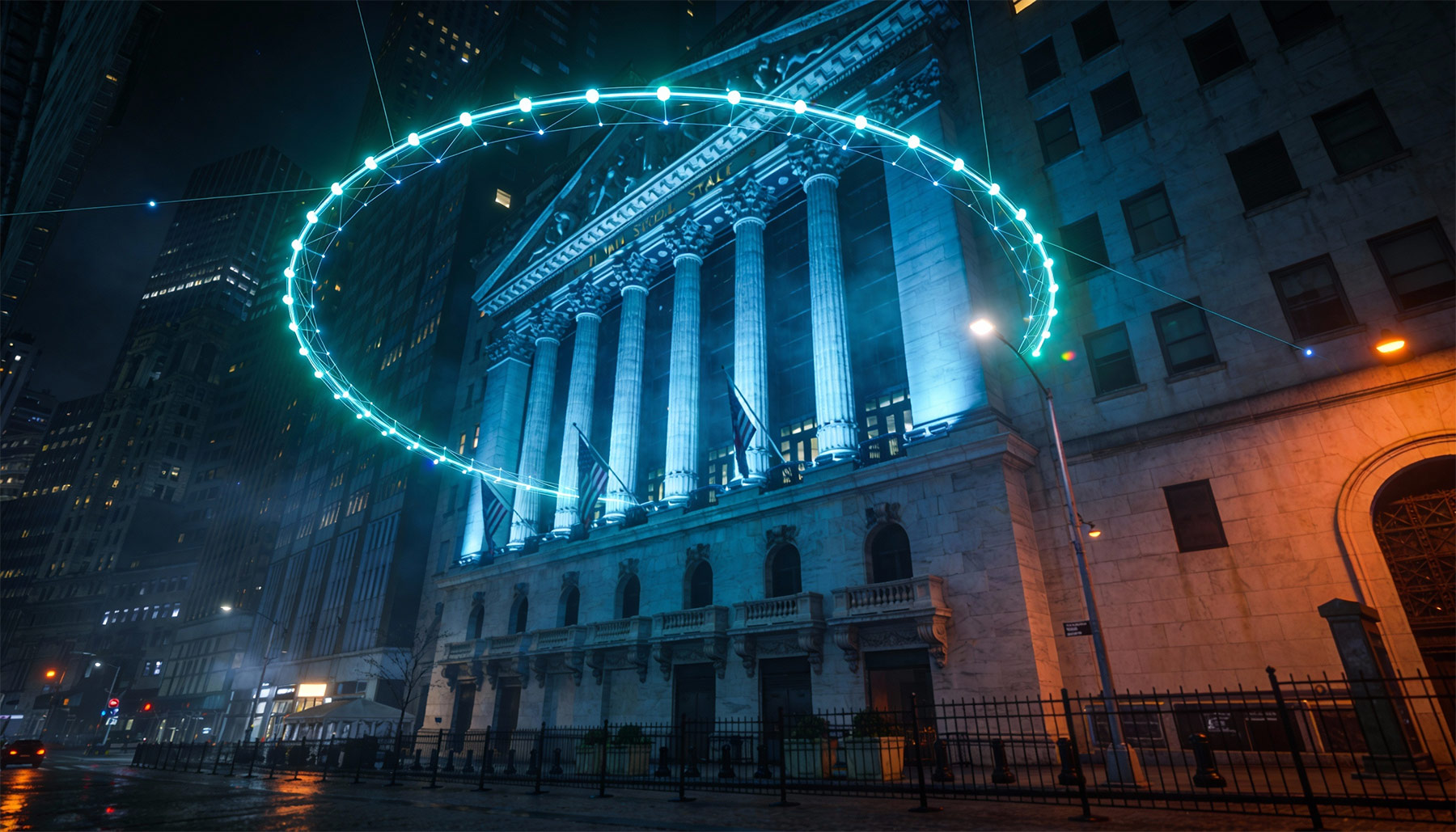
Two announcements on January 19, 2026 landed in the same direction from very different corners of the financial system.
First, the New York Stock Exchange said it is developing a platform for trading and on-chain settlement of tokenized securities, designed to support 24/7 operations, fractional share trading, instant settlement, and stablecoin-based funding, subject to regulatory approvals. (Business Wire)
Second, the Government of Bermuda announced plans to become the world’s first “fully onchain” national economy, with Circle and Coinbase providing infrastructure and enterprise tools, and an initial rollout including stablecoin-based payments pilots, tokenization tools for financial institutions, and national digital literacy programs.
I’ve spent 25+ years raising capital for early-stage companies, advising on structure and investor readiness, and taking multiple companies public. From that vantage point, these announcements matter because they point to the same end-state: always-on markets running on always-on money.
This is not a “pilot season” headline cycle. It is an architecture shift.
What the NYSE Announcement Really Signals
The headline is “tokenized securities,” but the substance is market structure modernization.
NYSE/ICE is explicitly describing a new digital platform that combines:
• the NYSE’s Pillar matching engine with
• blockchain-based post-trade systems, with support for multiple chains for settlement and custody, and
• stablecoin-based funding to operate beyond traditional banking hours.
And crucially, it’s framed as a new NYSE venue designed to keep tokenized shares fungible with traditionally issued securities, while preserving dividends and governance rights.
If you’ve worked in capital markets, you know why this is significant: the hardest part is not “tokenizing a share.” The hard part is building a system that can preserve investor protections, distribution norms, and market access while moving settlement toward real-time.
ICE also connected this initiative to a broader push to prepare clearing infrastructure for 24/7 trading and explore tokenized collateral, noting work with banks like BNY and Citi on tokenized deposits across clearinghouses.
That is a direct acknowledgment that the next constraint is not trading. It is funding, settlement, and clearing.
Why Bermuda’s “Fully Onchain Economy” Matters More Than It Sounds
Bermuda’s announcement is a different kind of signal: a jurisdiction saying “we want onchain rails to be normal.”
Circle’s release frames the intent clearly: using digital assets as everyday financial infrastructure, motivated by the cost and friction of traditional rails for merchants and an entrepreneurial economy.
The stated first steps are practical:
• pilot stablecoin-based payments within government,
• expand onchain usage across businesses and institutions,
• and support broad digital finance onboarding and education. (Circle)
For capital markets, this matters because adoption doesn’t come from one exchange or one issuer. It comes when the surrounding ecosystem (payments, wallets, compliance tooling, settlement rails) becomes sufficiently “boring” and dependable to support large-scale flows.
Bermuda is attempting to make onchain “boring” at a national level.
The Through-Line: 24/7 Markets Require 24/7 Settlement and 24/7 Money
These stories converge on a single theme: continuous markets are pulling the rest of the stack with them.
When markets go 24/7, three things have to evolve together:
1. Trading hours (the visible part)
2. Funding and collateral mobility (stablecoins, tokenized deposits, tokenized collateral)
3. Clearing and settlement (the invisible part that determines risk, capital efficiency, and operational cost)
This is why the NYSE announcement emphasized not only tokenized trading experiences but also post-trade design and clearing readiness.
In my experience, when a system upgrades, value accrues disproportionately to the infrastructure that removes the bottleneck. In this cycle, that bottleneck is increasingly clearing and settlement.
Where the Opportunity Actually Is
Tokenization narratives often focus on “which assets will be tokenized first.” The bigger opportunity is: who provides the trusted plumbing.
Traditional settlement is still optimized for batch windows and multi-day cycles. Tokenized assets, by design, push toward faster finality and continuous operations. That mismatch creates a gap the industry has to fill.
This is also the thesis behind what we’re building at TokenClear: not as a headline-grabbing “tokenization project,” but as infrastructure aimed at the post-trade reality the NYSE/ICE direction implies. In our deck, we describe the market moving from T+2 toward near-instant settlement, while legacy clearing remains “stuck in the mainframe era,” creating a structural opening for new clearing rails that can meet institutional requirements.
The point is not that one platform “wins” because tokenization exists. The point is that the first credible, compliant, scalable settlement and clearing layer for always-on tokenized markets becomes foundational.
What to Watch Next
If you want to gauge whether this is truly an inflection point, watch for four concrete developments:
1. Regulatory pathway clarity for the NYSE/ICE venue (approval cadence will matter as much as the tech).
2. Tokenized deposits and stablecoin funding expanding inside clearing ecosystems (because continuous markets need continuous funding).
3. Real government payment pilots proving stablecoins reduce friction in public-sector workflows (Bermuda is explicitly starting here).
4. Interoperability and standards emerging around custody, identity, and auditability (the “boring” requirements that define institutional adoption).
Bottom Line
This week’s announcements are meaningful because they are not “crypto companies talking to crypto companies.” They are:
• a top-tier exchange operator describing a path to on-chain market infrastructure, and
• a government describing onchain rails as national economic infrastructure. (Business Wire)
That is what “the time is right” looks like in capital markets: not hype, but coordinated movement of the stack.



Fintech
Newsletter.


