
Trump Opens the Door to a Bigger U.S. Bitcoin Reserve

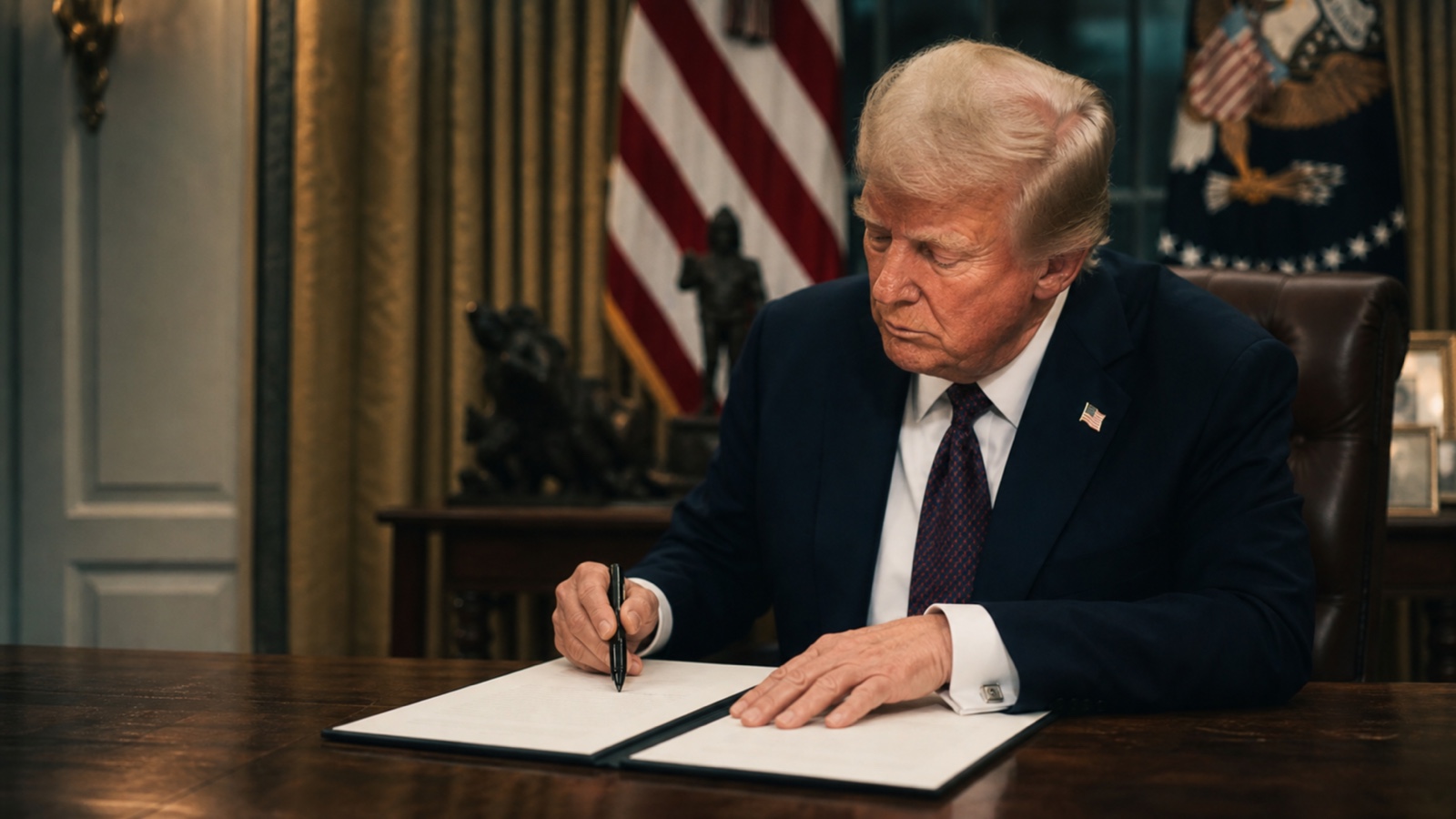
President Trump has opened the door to further U.S. Bitcoin accumulation.
During an August 19 White House gathering with leaders from crypto, technology, and traditional finance, a reporter asked whether the administration planned to accumulate sizable amounts of Bitcoin or other crypto.
Trump said the idea had been discussed. He turned to SEC Chairman Paul Atkins and the assembled group for a recommendation, then added, “I would certainly listen.”
That was the strongest market signal to come out of the event.
The United States already has a Strategic Bitcoin Reserve. The existing executive order also gives the Treasury and Commerce departments a path to develop budget neutral strategies for acquiring more Bitcoin. Now the President has publicly invited the people shaping American financial policy to consider the next move.
Trump set no allocation or timetable. He moved the question of further federal accumulation into a live policy conversation at the White House, surrounded by the regulators, exchanges, custodians, and market operators capable of turning direction into infrastructure.
I have spent years arguing that Bitcoin would move from a speculative asset into institutional and sovereign infrastructure. This is what that migration looks like. Policy, market structure, custody, and capital are beginning to move in the same direction.
Washington Is Discussing Accumulation in Public
The full exchange matters because of where it happened and who heard it.
A sitting President told the leaders shaping American market policy to evaluate further federal Bitcoin accumulation and return with recommendations. The room included the leaders of the SEC and CFTC alongside executives from Coinbase, Kraken, Ripple, Robinhood, Nasdaq, Intercontinental Exchange, and other firms that operate the trading, custody, clearing, and settlement layers of modern markets.
That combination gives the statement weight. Bitcoin reserve policy is no longer confined to campaign language or industry conferences. It is being discussed inside the White House with the institutions that can support regulated execution at scale.
Kraken co CEO Arjun Sethi used his remarks to argue that Americans should have the same ability to succeed that leading crypto entrepreneurs had. His statement supplied the access argument. Trump added the sovereign balance sheet question.
Together, those themes point toward a broader American digital asset strategy: keep innovation onshore, widen access, build trusted market rails, and treat Bitcoin as a strategic asset.
The United States Already Has an Acquisition Path
The March 2025 executive order established the Strategic Bitcoin Reserve and directed the Treasury and Commerce secretaries to develop budget neutral strategies for acquiring additional government Bitcoin.
That means the policy foundation already exists.
The reserve holds Bitcoin owned by the federal government, primarily through criminal and civil forfeiture. Those reserve assets shall not be sold. The government therefore begins this discussion with an existing position, a long term holding policy, and executive direction to explore how that position could grow without incremental cost to taxpayers.
Budget neutral acquisition creates room for serious policy design. Treasury could evaluate asset swaps, revenue linked strategies, changes in the management of existing government holdings, or other structures available under applicable law.
The White House discussion gives that work fresh political momentum. The reserve and acquisition path are already part of federal policy. Trump asked the people around him to advance them.
The Market Infrastructure Is Already in the Room
The White House event took place one day before the first public meeting held under the CFTC Innovation Advisory Committee name.
Chairman Michael Selig created the current body by renaming the existing Technology Advisory Committee and expanding its membership and scope. Its 43 listed members include Coinbase, Kraken, Ripple, Chainlink, Uniswap Labs, Consensys, Solana Labs, Anchorage Digital, BitGo, Nasdaq, ICE, CME Group, Cboe, LSEG, DTCC, the Options Clearing Corporation, Franklin Templeton, and others.
That roster covers most of the operating stack needed to bring digital assets into regulated American markets. Crypto native firms contribute product knowledge and technical architecture. Exchanges and clearing organizations bring market integrity, risk management, and scale. Custodians and asset managers connect the system to institutional capital.
The committee charter makes its role advisory. That is exactly where experienced operators can add value: translating political direction into practical recommendations on custody, derivatives, collateral, surveillance, operational resilience, and continuous trading.
The roster brings the people building digital asset markets into the same policy process as the institutions that run American capital markets.
Five Forces Are Moving in the Same Direction
Five reinforcing forces now support the next phase of American Bitcoin and digital asset policy:
- The President has expressed public openness to further federal Bitcoin accumulation.
- The United States already has a Strategic Bitcoin Reserve and a long term holding policy.
- Treasury and Commerce already have direction to explore budget neutral acquisition strategies.
- The SEC, CFTC, crypto firms, exchanges, custodians, and clearing organizations are participating in the same market structure conversation.
- Institutional infrastructure for custody, tokenization, collateral, clearing, and continuous trading is moving closer to production.
Any one of these signals would matter. Together, they show a market moving from acceptance toward coordinated execution.
The direction of travel is clear. Bitcoin is becoming part of American strategic policy while digital asset infrastructure becomes part of the regulated financial system.
Why This Matters for Partners and Builders
For potential partners, the opportunity comes from alignment.
The White House wants innovation pioneered and perfected in the United States. Regulators are working directly with market operators. Traditional exchanges and clearing organizations are participating in the same process as crypto firms. The federal government already holds Bitcoin and is considering how to expand that position.
That alignment gives infrastructure projects a wider field of potential partners, clearer institutional context, and stronger strategic relevance.
Companies that provide qualified custody, compliant issuance, tokenization, settlement, identity, reporting, cyber resilience, market surveillance, and treasury governance now operate inside a much larger national agenda. Their products support the same questions being discussed by the White House, federal regulators, and the institutions responsible for market plumbing.
At Deal Box, we have spent nearly a decade building around the view that digital assets would mature into regulated capital markets infrastructure. The policy conversation is catching up to the architecture. For partners who share that view, this is the time to build relationships, connect capabilities, and demonstrate how the pieces work together.
In my experience, the strongest partnerships in financial infrastructure form while standards, workflows, and market roles are taking shape. The current coalition creates that window.
Bitcoin Momentum Strengthens the Tokenization Thesis
The immediate signal centers on Bitcoin, but the infrastructure implications extend across digital markets.
A government that holds more Bitcoin will need many of the same controls that boards and institutions need: qualified custody, reconciled ownership records, transaction limits, valuation policy, audit evidence, cyber resilience, and defined authority.
Those capabilities also support tokenized securities and onchain capital markets. As SEC staff explained in January, a share, bond, or fund interest remains a security when its ownership record moves to a blockchain. Clear legal treatment increases the value of infrastructure that can connect compliant issuance with custody, trading, settlement, and reporting.
Sovereign reserves, regulated crypto markets, and tokenized capital markets increasingly depend on the same operational foundation. Every advance in custody, clearing, recordkeeping, and market integrity strengthens the entire system.
What Boards Should Take From This
The White House discussion strengthens Bitcoin's status as a strategic reserve asset and gives corporate decision makers another reason to prepare.
Boards evaluating digital asset treasury strategies can now point to a federal reserve structure, a long term government holding policy, executive direction to explore further acquisition, and a regulatory process that includes the country's leading market institutions.
That backdrop supports disciplined action. An approved mandate, defined transaction authority, qualified custody, independent reconciliation, counterparty limits, valuation policy, incident procedures, and clear reporting give companies the foundation to participate with confidence.
Greater government and institutional participation will reward companies that can show those controls. It will also raise demand for partners who can connect policy ambition to dependable execution.
The Opportunity in Front of Us
The United States has a Bitcoin reserve, a path to consider additional acquisition, and a White House asking leading regulators and market institutions to help shape what comes next.
For builders, investors, boards, and potential partners, the momentum is visible. Political support, regulatory engagement, and institutional infrastructure are converging around the same opportunity.
The companies that connect custody, compliance, tokenization, trading, settlement, and reporting will help define the next generation of American financial infrastructure. That work now connects the White House, federal regulators, crypto firms, and established market institutions.


Fintech
Newsletter.


